Celsius to Fahrenheit Converter
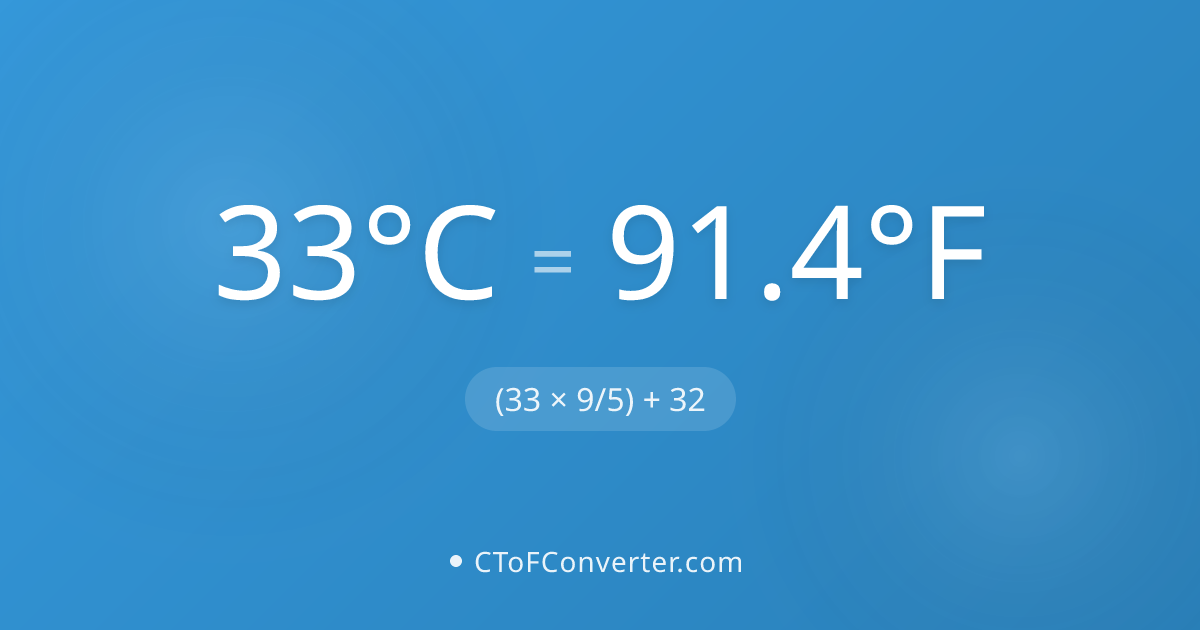
33°C in Fahrenheit is 91.4°F.
How to Convert 33 Celsius to Fahrenheit: Exact Formula
To convert from Celsius to Fahrenheit, use the following formula:
Step-by-Step Calculation
- Step 1: First, multiply your Celsius value (33) by 9/5 (or 1.8).
Calculation: 33 × 1.8 = 59.4 - Step 2: Next, simply add 32 to the result (59.4).
Calculation: 59.4 + 32 = 91.4 - Result: So, 33 degrees Celsius is equal to 91.4 degrees Fahrenheit.
33°C heat guide
When warm summer weather turns into real daytime heat
33°C (91.4°F) is firmly in hot-weather territory. Outdoors, many people start changing plans around the hottest hours. Indoors, fans help, but rooms often feel much better with stronger cooling.
Easier for work and sleep
Warm but still manageable
Cooling and timing matter
| Temperature | Description | Typical use |
|---|---|---|
| 30°C (86°F) | Hot | Shade and airflow become useful |
| 31°C (87.8°F) | Hot summer weather | Lighter activity and more water |
| 33°C (91.4°F) | Very hot | Plan around heat and limit midday effort |
| 35°C (95°F) | Intense heat | Heat safety becomes much more important |
| 37°C (98.6°F) | Normal body temperature | Useful comparison for body heat |
| 40°C (104°F) | Extreme heat | Outdoor exposure gets much tougher |
Note: 33°C can feel much harder in humid cities, still rooms, or direct sun. The same number feels easier when there is shade, wind, and lower humidity.
33°C (91.4°F) in daily life
At 33°C, late morning and afternoon usually feel genuinely hot, especially on pavement, in traffic, or under direct sun.
Indoors, cross-ventilation and fans still help, but many people start preferring air conditioning once rooms sit near 33°C.
Errands, workouts, and longer walks feel easier earlier or later in the day, with water and shade close by.
Frequently Asked Questions
That depends on sun, humidity, activity level, and your own health, but 33°C is hot enough that long outdoor time starts becoming tiring for most people.
- Short walks and light errands are usually fine with shade and water
- Midday sport or heavy work gets draining much faster
- If you feel dizzy, weak, or unusually flushed, it is time to cool down
The cheapest option is usually to block heat before it builds up, then use airflow well.
- Close blinds or curtains on the sunny side
- Run fans with open windows when outdoor air is cooler
- Use air conditioning to hold a steady, realistic target instead of trying to make the room very cold fast
At 33°C, many homes still need AC for real comfort, but good shading and airflow reduce how hard it has to work.
At 33°C, devices can heat up noticeably faster, especially in direct sun, on a car seat, or while charging. Phones and laptops may dim screens, slow performance, or pause charging to protect themselves.
Keeping electronics out of direct sunlight and off hot surfaces matters more than the air temperature alone.
Without AC, the goal is to move heat away from your body and keep air circulating.
- Use the lightest bedding you can sleep with comfortably
- Point a fan so it actually moves air across the bed
- Keep daytime sun out of the bedroom if possible
Even with those tricks, many people still find 33°C nights sticky and restless, especially when humidity is high.
ℹ️ Editorial Note
Weather interpretation and 'feels like' descriptions are based on meteorological indices and public safety advisories regarding heat and cold exposure.
Sources: NOAA, National Weather Service, Met Office.