36.5°C to Fahrenheit Conversion: Medical Standard
36.5°C (97.7°F) represents the standard normal body temperature used in medical guidelines worldwide. This temperature indicates optimal physiological function and is the benchmark for assessing health across all age groups.
36.5°C: The Gold Standard for Normal Body Temperature
Adults
Normal
36.5°C = 97.7°F
Optimal range
Babies
Normal
36.5°C = 97.7°F
Healthy baseline
Under Arm
Normal
36.5°C = 97.7°F
Ideal reading
36.5°C to Fahrenheit Conversion: Medical Standard
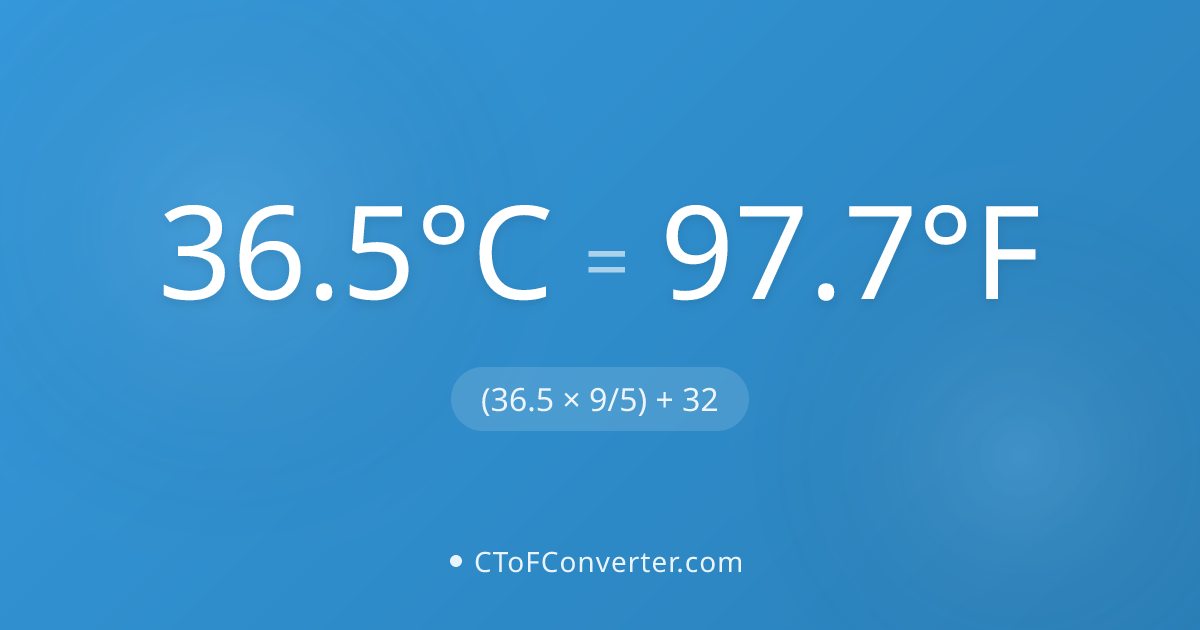
(36.5°C × 9/5) + 32 = 97.7°F
- Multiply 36.5 by 9/5: 36.5 × 1.8 = 65.7
- Add 32 to the result: 65.7 + 32 = 97.7
- Final result: 36.5°C = 97.7°F (standard normal)
🏥 WHO & Medical Guidelines: 36.5°C as Normal Standard
World Health Organization and major medical institutions define normal body temperature as 36.5-37.5°C. 36.5°C (97.7°F) represents the lower optimal range, indicating healthy metabolic function. This standard is used in hospitals, clinics, and medical textbooks worldwide.
🔬 Why 36.5°C is Optimal for Body Function
At 36.5°C, your body operates at peak efficiency: Enzymes function optimally for digestion and metabolism; Immune cells are most active against pathogens; Cardiovascular system maintains ideal blood flow; Brain function is sharp and responsive; Hormone production is balanced. This is why medical guidelines use 36.5°C as the standard.
36.5°C Readings: Medical Standard by Measurement Site
36.5°C (97.7°F) is the medical standard for normal body temperature. Understanding how different measurement sites compare to this benchmark ensures accurate health assessment.
Oral
36.5°C = 97.7°F
Standard normal oral reading
Under Arm
36.5°C = 97.7°F
Optimal axillary measurement
Ear
36.5°C = 97.7°F
Standard tympanic result
Rectal
36.5°C = 97.7°F
Medical standard for infants
36.5°C: Optimal Temperature Standards by Age Group
👶 Newborns - Optimal Temperature Baseline
36.5°C = 97.7°F
- 36.5°C (97.7°F) is the optimal baseline for newborns
- Represents healthy metabolic function
- Consistent readings indicate good thermoregulation
- Contact pediatrician if consistently below 35.8°C
👶 Infants - Healthy Standard Temperature
36.5°C = 97.7°F
- 36.5°C is the medical standard for healthy infants
- Ideal temperature for normal growth and development
- Monitor feeding and activity alongside readings
- Seek care if below 35.5°C or above 38°C
🧒 Children - Standard Normal Range
36.5°C = 97.7°F
- 36.5°C represents standard healthy temperature
- Optimal for school activities and play
- Varies 0.5°C throughout the day (normal)
- Check if consistently below 35.8°C
👨🦳 Adults - The Optimal Temperature Standard
36.5°C = 97.7°F
- 36.5°C (97.7°F) is the medical standard for normal
- Represents optimal immune and metabolic function
- Ideal for all physiological processes
- Not a cause for concern - this is the benchmark
Body Temperature Scale: 36.5°C as the Standard
Medical assessment scale with 36.5°C as the normal benchmark:
| Celsius (°C) | Fahrenheit (°F) | Medical Assessment |
|---|---|---|
| 35.5°C | 95.9°F | Low normal - Monitor |
| 36.0°C | 96.8°F | Normal - Lower range |
| 36.4°C | 97.5°F | Normal - Approaching standard |
| 36.5°C | 97.7°F | ✅ STANDARD NORMAL - Optimal function |
| 37.0°C | 98.6°F | Normal - Classic average |
| 37.5°C | 99.5°F | High normal / Low fever |
| 38.0°C | 100.4°F | Fever threshold |
Frequently Asked Questions
36.5°C (97.7°F) is considered the medical standard for normal body temperature. WHO and medical institutions define normal range as 36.5-37.5°C. 36.5°C represents optimal physiological function where enzymes, immune cells, and metabolic processes work most efficiently. It's the gold standard benchmark.
Medical institutions use 36.5°C (97.7°F) as the standard because: 1) It represents optimal enzyme function for digestion; 2) Immune cells are most active at this temperature; 3) Cardiovascular system maintains ideal blood flow; 4) Brain function is sharp; 5) Hormone production is balanced. This is why textbooks and hospitals use 36.5°C as the benchmark.
Yes, 36.5°C (97.7°F) is normal for all ages. WHO guidelines state normal body temperature is 36.5-37.5°C for everyone. For babies, it indicates good thermoregulation. For children, it supports growth and activity. For adults, it represents optimal immune and metabolic function. This is the universal medical standard.
36.4°C (97.5°F) represents the lower limit of modern average body temperature according to recent Stanford research. 36.5°C (97.7°F) is the traditional medical standard used by WHO and hospitals worldwide. Both are normal, but 36.5°C has been the clinical benchmark for medical assessment for decades.
No. Normal body temperature ranges from 36.0°C to 37.5°C (96.8°F to 99.5°F). 36.5°C is the standard benchmark, but anywhere in the normal range is healthy. Individual baseline varies by 0.3-0.5°C. Worry only if consistently below 35.5°C or above 37.8°C, or if accompanied by illness symptoms.
To convert 36.5°C to Fahrenheit: Multiply 36.5 by 9/5 (or 1.8) = 65.7; Add 32 to the result: 65.7 + 32 = 97.7; Final answer: 36.5°C = 97.7°F. This represents the standard normal body temperature used in medical guidelines and hospitals worldwide.
ℹ️ Editorial Note
Medical temperature data is reviewed against clinical guidelines. Fever thresholds and body temperature interpretations align with standards from major health organizations. Content is compiled based on publicly available clinical guidelines.
Sources: World Health Organization (WHO), CDC, Medical Literature.