Celsius to Fahrenheit Converter
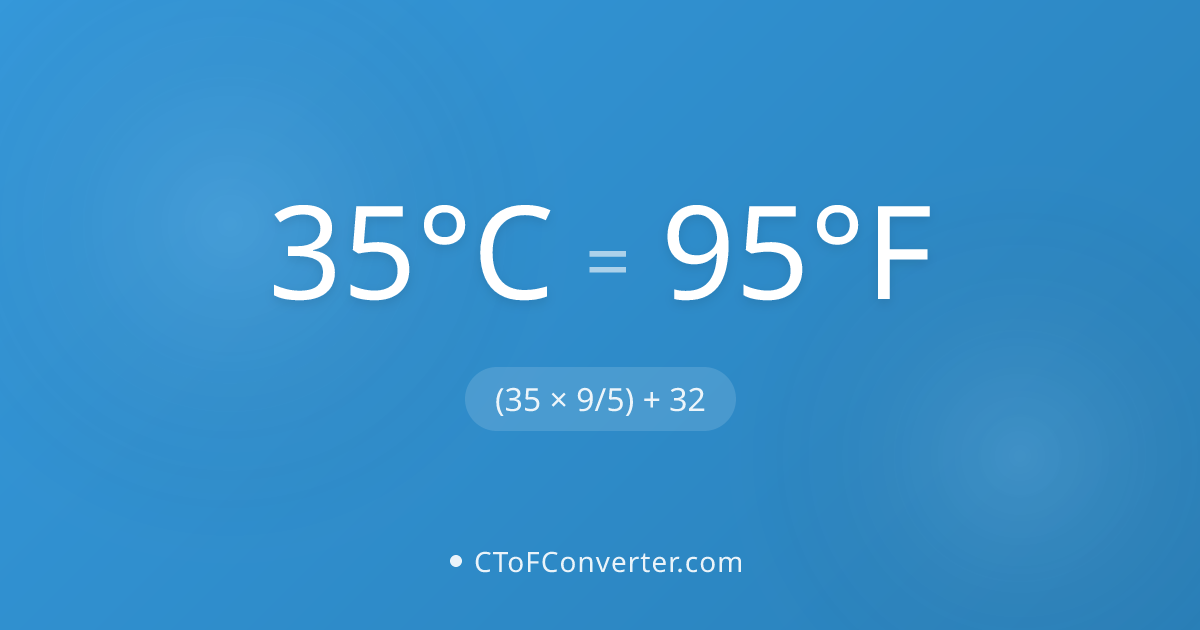
35°C in Fahrenheit is 95°F.
How to Convert 35 Celsius to Fahrenheit: Exact Formula
To convert from Celsius to Fahrenheit, use the following formula:
Step-by-Step Calculation
- Step 1: First, multiply your Celsius value (35) by 9/5 (or 1.8).
Calculation: 35 × 1.8 = 63 - Step 2: Next, simply add 32 to the result (63).
Calculation: 63 + 32 = 95 - Result: So, 35 degrees Celsius is equal to 95 degrees Fahrenheit.
35°C heat and safety guide
When hot weather starts becoming a real heat-risk conversation
35°C (95°F) is not just warm summer weather. Outdoors, it often means slower movement, more shade, and real attention to hydration. Indoors, many people start relying on stronger cooling, especially in humid places.
Much easier for work and sleep
Warm but still manageable
Heat safety starts to matter
| Temperature | Description | Typical use |
|---|---|---|
| 32°C (89.6°F) | Very hot | Midday activity already feels heavier |
| 33°C (91.4°F) | Very hot | Cooling and timing matter more |
| 35°C (95°F) | Intense heat | Heat precautions become much more important |
| 37°C (98.6°F) | Normal body temperature | Useful comparison for body heat |
| 38°C (100.4°F) | Fever threshold | Important body-temperature comparison |
| 40°C (104°F) | Extreme heat | Outdoor exposure becomes far tougher |
Note: 35°C can feel dangerous much faster when humidity is high, shade is limited, or the air is still. The same number feels very different in dry wind than in a humid city.
35°C (95°F) in daily life
At 35°C, the hottest hours often decide when people go out, exercise, or even run basic errands. The weather stops feeling merely summery and starts feeling demanding.
Shade, cold drinks, fans, and air conditioning matter more at 35°C because the body has less margin for extra heat.
At this temperature, rooms often hold onto the day’s heat. Even evenings can feel heavy if airflow is weak or humidity is high.
Frequently Asked Questions
For weather, 35°C (95°F) is very hot. In many places it is the kind of temperature where people change outdoor plans, look for shade, and treat the afternoon as serious heat rather than normal summer warmth.
No. As a body-temperature reading, 35°C is actually below normal. Fever usually starts around 38°C (100.4°F), while 35°C body temperature points toward hypothermia, not fever.
It can be risky. Babies heat up faster than adults and depend on adults to keep them cool, shaded, and hydrated.
- Limit direct sun and hot-stroller time
- Keep air moving and dress them lightly
- If a baby seems unusually sleepy, flushed, or hard to settle, cool them down and seek medical advice if needed
Wet-bulb temperature reflects how well sweating can cool the body. When humidity rises, sweat stops evaporating efficiently, so heat stress builds much faster.
A wet-bulb temperature near 35°C is considered critical because the body can no longer cool itself effectively, even in the shade.
A quick mental shortcut is to double 35, subtract 10%, then add 32.
35 × 2 = 70, 70 - 7 = 63, and 63 + 32 = 95°F.
It is fast, and in this case it gives the exact answer.
Nearby temperatures help show where 35°C sits on the heat scale:
- 33°C = 91.4°F, already very hot
- 35°C = 95°F, where heat precautions become more important
- 37°C = 98.6°F, normal human body temperature
- 40°C = 104°F, extreme heat in many regions
ℹ️ Editorial Note
Medical temperature data is reviewed against clinical guidelines. Fever thresholds and body temperature interpretations align with standards from major health organizations. Content is compiled based on publicly available clinical guidelines.
Sources: World Health Organization (WHO), CDC, Medical Literature.