Celsius to Fahrenheit Converter
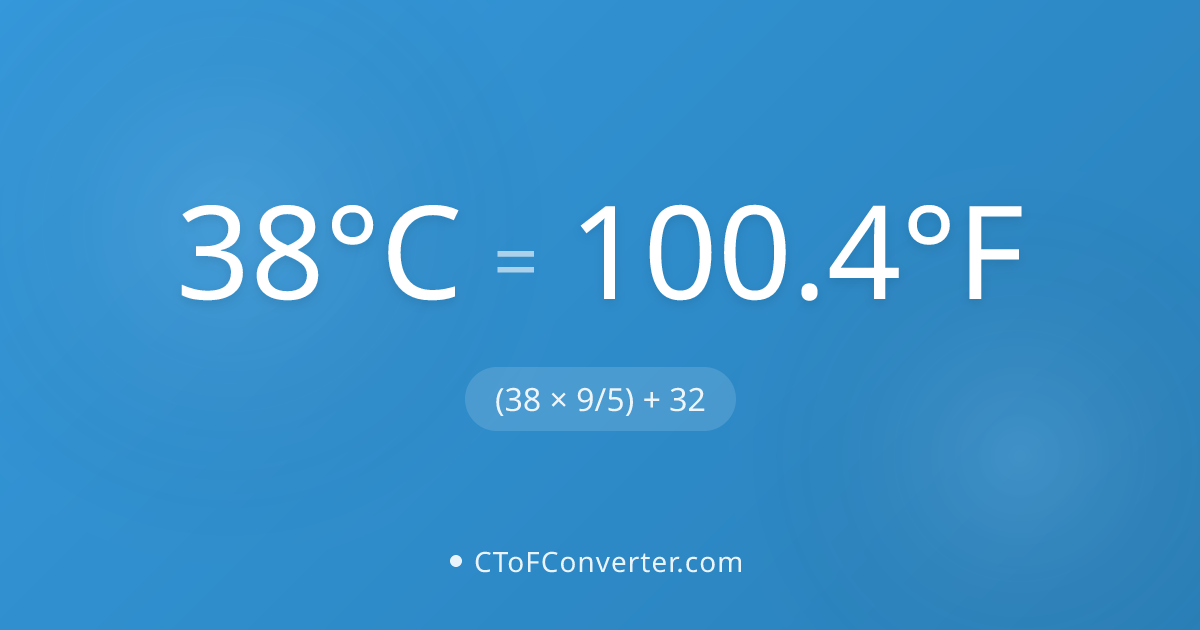
38 degrees Celsius equals 100.4 degrees Fahrenheit. This temperature conversion is commonly used in body temperature measurements. Consult our comprehensive Body Temperature Chart & Fever Guide for accurate diagnostics.
38°C Fever Assessment: Medical Threshold
Adults
Fever
38°C = 100.4°F
Monitor symptoms
Babies
Fever
38°C = 100.4°F
Contact doctor immediately
Under Arm
Fever
38°C = 100.4°F
Core temp ~38.5°C
38°C to Fahrenheit Conversion Formula
(38°C × 9/5) + 32 = 100.4°F
- Multiply 38 by 9/5: 38 × 1.8 = 68.4
- Add 32 to the result: 68.4 + 32 = 100.4
- Final result: 38°C = 100.4°F
Temperature Measurement Methods at 38°C
38°C (100.4°F) readings vary by measurement site. Understanding these differences is crucial for accurate assessment.
Oral
38°C = 100.4°F
Standard fever threshold
Under Arm
38°C = 100.4°F
38°C axillary = 38.5°C core
Ear
38°C = 100.4°F
Tympanic fever reading
Rectal
38°C = 100.4°F
Most accurate for infants
When to Use Fever Reducers (Antipyretics)
Not all fevers require medication. Use antipyretics when:
For Adults
- Temperature exceeds 38.5°C (101.3°F)
- Experiencing significant discomfort
- Unable to sleep due to fever
- Have underlying health conditions
| Medication | Dose | Max |
|---|---|---|
| Acetaminophen (Tylenol) | 500-1000mg every 6 hours | 3000mg/day |
| Ibuprofen (Advil/Motrin) | 200-400mg every 6 hours | 1200mg/day |
⚠️ Do NOT give aspirin to children or teens with fever
For Children (6+ months)
- Temperature exceeds 38.5°C (101.3°F)
- Child is uncomfortable or in pain
- Doctor recommends treatment
| Medication | Dose | Max |
|---|---|---|
| Acetaminophen | 10-15mg/kg every 4-6 hours | Check label |
| Ibuprofen | 5-10mg/kg every 6-8 hours | Check label |
⚠️ Never give aspirin to children
38°C Fever Guide by Age Group
👶 Newborns (0-3 months) - EMERGENCY
38°C = 100.4°F
- EMERGENCY: Seek immediate medical care
- Immature immune system cannot fight infections well
- Risk of serious bacterial infection (SBI)
- Any fever 38°C+ requires immediate evaluation
👶 Infants (3-6 months) - URGENT
38°C = 100.4°F
- Contact pediatrician same day
- May need urine/blood tests
- Monitor for other symptoms
- Do not wait more than 24 hours
🧒 Children (6+ months)
38°C = 100.4°F
- Monitor for 24-48 hours if child appears well
- Ensure adequate hydration
- Watch for warning signs
- Contact doctor if persists >48 hours
👨🦳 Adults
38°C = 100.4°F
- Usually manageable at home
- Rest, hydrate, monitor
- Seek care if persists >3 days
- Watch for worsening symptoms
Complete Fever Temperature Scale
Understanding fever severity levels from normal to dangerous:
| Celsius (°C) | Fahrenheit (°F) | Medical Assessment |
|---|---|---|
| 37.0°C | 98.6°F | Normal body temperature |
| 37.5°C | 99.5°F | High normal / Low-grade |
| 38.0°C | 100.4°F | Fever threshold - Monitor |
| 38.5°C | 101.3°F | Moderate fever - Treat if uncomfortable |
| 39.0°C | 102.2°F | High fever - Antipyretics recommended |
| 39.5°C | 103.1°F | Very high fever - Seek care |
| 40.0°C | 104.0°F | Dangerous fever - Urgent care needed |
| 40.5°C | 104.9°F | Medical emergency - Go to ER |
Frequently Asked Questions
Yes, 38°C (100.4°F) is the standard medical definition of fever worldwide. This threshold is used by healthcare professionals to determine when body temperature is elevated enough to be considered febrile. Note: This applies to oral measurements. Rectal fever threshold is 38.3°C (101°F), and underarm is 37.5°C (99.5°F).
For most healthy adults, 38°C (100.4°F) is NOT dangerous. It's actually your immune system working effectively. Seek medical care if: Fever exceeds 39.4°C (103°F); Persists >3 days; Accompanied by severe headache, stiff neck, shortness of breath, chest pain, or confusion; You have compromised immunity or chronic conditions.
38°C (100.4°F) in babies requires age-based response: Newborns 0-3 months: EMERGENCY - seek immediate care; Infants 3-6 months: URGENT - contact pediatrician same day; Babies 6+ months: Monitor closely, contact doctor if persists >24 hours. Always use rectal thermometers for accuracy in infants.
Yes! Underarm (axillary) temperatures read 0.5°C (0.9°F) lower than oral. If you measure 38°C under the arm, your actual core temperature is approximately 38.5°C (101.3°F) - already in moderate fever range. Medical thresholds are based on oral measurements, so add 0.5°C to underarm readings for accuracy.
38°C (100.4°F) itself is usually not worrisome, but watch for: Infants <3 months: Any 38°C+ is emergency; Children: Fever >48 hours or lethargy; Adults: Fever >3 days or severe symptoms; Anyone: Stiff neck, severe headache, breathing difficulty, chest pain, confusion, or rash. How the person looks/acts matters more than the number.
Take antipyretics when: Adults: Temperature >38.5°C (101.3°F) OR significant discomfort; Children: Temperature >38.5°C (101.3°F) AND child is uncomfortable; Never give aspirin to children. Common options: Acetaminophen (Tylenol) or Ibuprofen (Advil). Remember: Treat the person, not just the number - a comfortable child with 38.5°C fever may not need medication.
ℹ️ Editorial Note
Medical temperature data is reviewed against clinical guidelines. Fever thresholds and body temperature interpretations align with standards from major health organizations. Content is compiled based on publicly available clinical guidelines.
Sources: World Health Organization (WHO), CDC, Medical Literature.