Celsius to Fahrenheit Converter
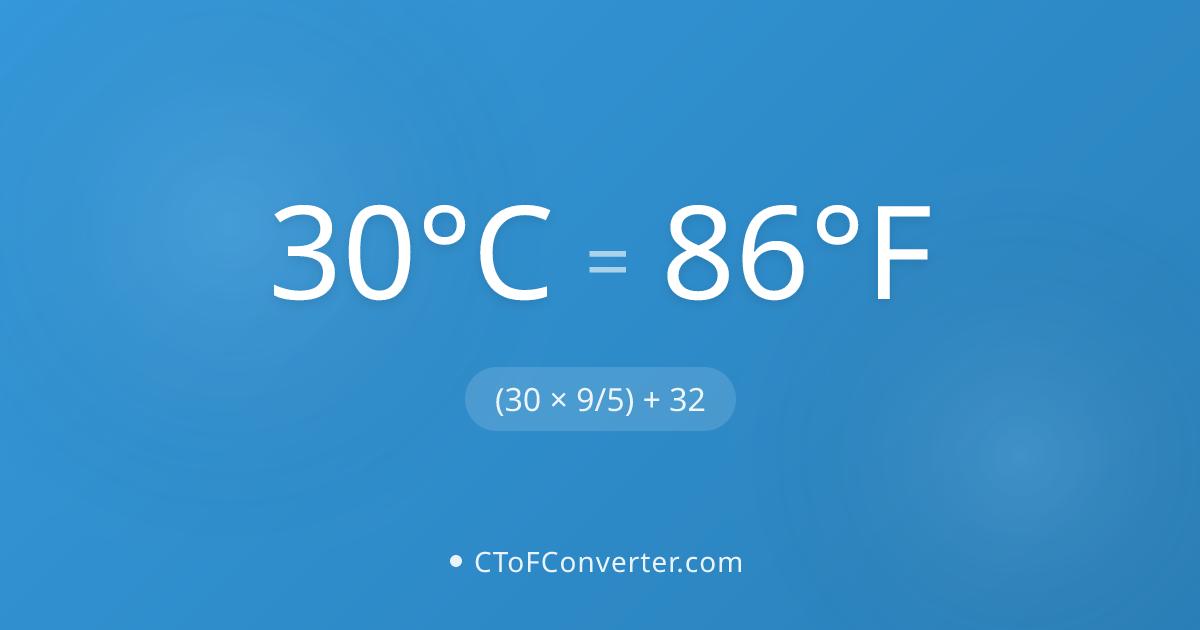
30°C in Fahrenheit is 86°F.
How to Convert 30 Celsius to Fahrenheit: Exact Formula
To convert from Celsius to Fahrenheit, use the following formula:
Step-by-Step Calculation
- Step 1: First, multiply your Celsius value (30) by 9/5 (or 1.8).
Calculation: 30 × 1.8 = 54 - Step 2: Next, simply add 32 to the result (54).
Calculation: 54 + 32 = 86 - Result: So, 30 degrees Celsius is equal to 86 degrees Fahrenheit.
30°C heat guide
When 30°C moves from warm to properly hot
30°C (86°F) is a hot-weather temperature for most people. Outdoors it feels like a classic summer afternoon. Indoors, it usually feels too warm for comfort unless the space is airy or cooled.
Fresh and easier indoors
Manageable with light clothes
Shade, cooling, and hydration help
| Temperature | Description | Typical use |
|---|---|---|
| 26°C (78.8°F) | Warm summer feel | Light clothing and outdoor comfort |
| 28°C (82.4°F) | Warm to hot | Shade and airflow start to matter |
| 30°C (86°F) | Hot | Afternoon heat and indoor cooling needs |
| 32°C (89.6°F) | Very hot | Keep outdoor effort lighter |
| 35°C (95°F) | Intense heat | Heat precautions become more important |
| 37°C (98.6°F) | Normal body temperature | Useful body-temperature comparison |
Note: 30°C can still feel pleasant in dry air with breeze, but in humid cities or closed rooms it quickly starts to feel tiring.
30°C (86°F) in daily life
At 30°C, late morning and afternoon usually feel genuinely hot, especially on pavement, in traffic, or under direct sun.
Indoors, cross-ventilation and fans still help, but many people start preferring air conditioning once rooms sit near 30°C.
Errands, workouts, and longer walks feel easier earlier or later in the day, with water and shade close by.
Frequently Asked Questions
30°C equals 86°F. The formula is °F = (°C × 9/5) + 32, so 30 × 1.8 = 54, and 54 + 32 = 86°F.
No. Fever usually starts around 38°C (100.4°F). If 30°C were a body-temperature reading, it would actually be much too low, not a fever.
30°C often shows up in weather planning, travel decisions, summer routines, and air-conditioning discussions. It is also a useful reference point for hot indoor rooms, greenhouse checks, and heat-related comfort comparisons.
ℹ️ Editorial Note
Weather interpretation and 'feels like' descriptions are based on meteorological indices and public safety advisories regarding heat and cold exposure.
Sources: NOAA, National Weather Service, Met Office.