36.4°C to Fahrenheit Conversion: The New Normal Standard
A body temperature of 36.4°C (97.52°F) is considered completely normal and healthy for most people. Normal body temperature varies by age — infants typically range from 36.5°C to 37.5°C, children from 36.0°C to 37.2°C, and adults from 36.1°C to 37.2°C. A fever is generally defined as a temperature of 38°C (100.4°F) or higher. Use the calculator below to convert 36.4°C to Fahrenheit, and explore our complete body temperature chart by age group.
36.4°C: Modern Research Updates Normal Body Temperature
Adults
Normal
36.4°C = 97.52°F
Lower average range
Babies
Normal
36.4°C = 97.52°F
Healthy baseline
Under Arm
Normal
36.4°C = 97.52°F
Common reading
📊 Stanford Research: Body Temperatures Are Dropping
A 2020 Stanford Medicine study analyzed 677,000 temperature measurements over 157 years and found average body temperatures have decreased by 0.03°C per decade. The traditional 37°C (98.6°F) standard from 1868 is outdated. Modern normal range: 36.4°C to 36.6°C (97.5°F to 97.9°F).
36.4°C to Fahrenheit Conversion: The New Normal Standard
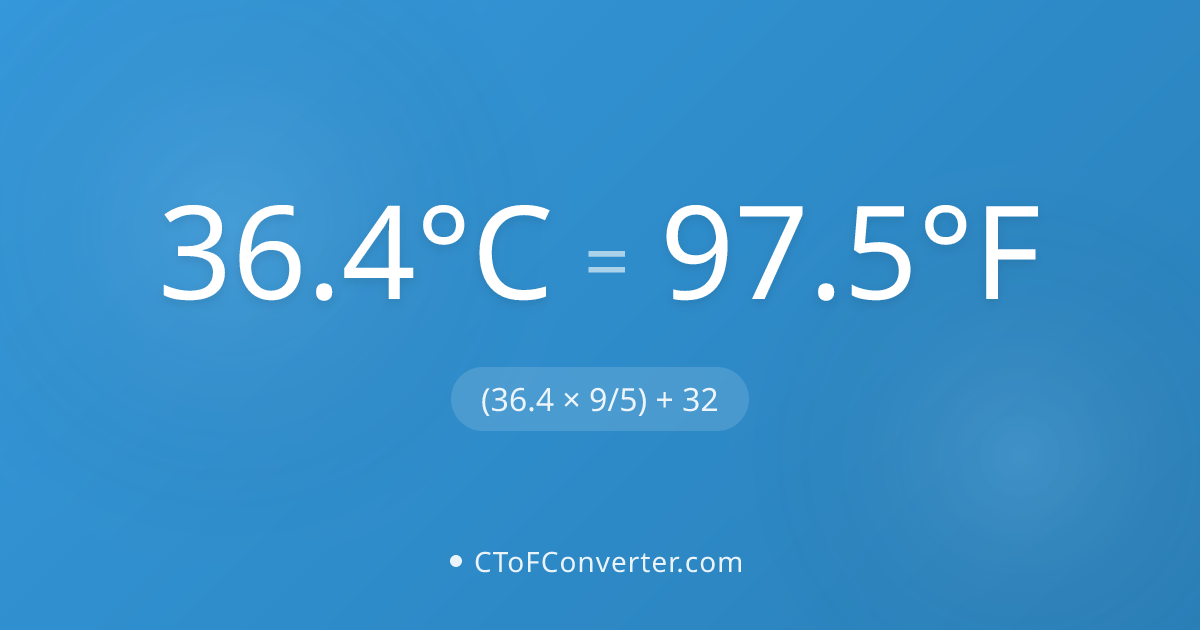
(36.4°C × 9/5) + 32 = 97.5°F
- Multiply 36.4 by 9/5: 36.4 × 1.8 = 65.52
- Add 32 to the result: 65.52 + 32 = 97.52
- Final result: 36.4°C = 97.5°F (new normal lower limit)
36.4°C Readings: Updated Normal Standards by Method
36.4°C (97.5°F) represents the new lower limit of normal. Understanding measurement differences is crucial as medical standards update from the old 37°C (98.6°F) benchmark.
Oral
36.4°C = 97.52°F
Modern lower normal limit
Under Arm
36.4°C = 97.52°F
Typical axillary reading
Ear
36.4°C = 97.52°F
Normal tympanic result
Rectal
36.4°C = 97.52°F
Healthy for infants
36.4°C: Modern Temperature Standards by Age
👶 Newborns - Modern Healthy Baseline
36.4°C = 97.52°F
- 36.4°C (97.5°F) aligns with new lower average standards
- Newborns often run cooler than old 37°C benchmark
- Monitor patterns - single readings matter less
- Contact pediatrician only if consistently below 35.8°C
👶 Infants - Within Updated Normal Range
36.4°C = 97.52°F
- 36.4°C reflects modern average temperature research
- Normal infant range updated: 36.0-37.5°C
- Lower temps increasingly common since 2000
- Doctor visit if below 35.5°C or above 38°C
🧒 Children - New Normal Standard
36.4°C = 97.52°F
- 36.4°C represents modern average baseline
- Kids show same temperature decline as adults
- Healthy range expanded to 36.0-37.2°C
- Watch for consistent readings below 35.8°C
👨🦳 Adults - Why You're Cooler Than 98.6°F
36.4°C = 97.52°F
- 36.4°C (97.5°F) is the new average lower limit
- Stanford study: 0.03°C drop per decade since 1860s
- Better health, lower metabolism, indoor living explain drop
- Your 'low' temp is actually modern normal
Updated Body Temperature Scale: Old vs New Standards
Compare outdated 1860s standards with 2020s research:
| Celsius (°C) | Fahrenheit (°F) | 2025 Medical Assessment |
|---|---|---|
| 35.5°C | 95.9°F | Low normal - Monitor if persistent |
| 36.0°C | 96.8°F | Normal - Lower average range |
| 36.4°C | 97.5°F | ✅ Modern average lower limit (Stanford 2020) |
| 36.6°C | 97.9°F | ✅ Modern average upper limit |
| 37.0°C | 98.6°F | Old standard (1868) - Now considered warm |
| 37.5°C | 99.5°F | High normal / Low-grade fever |
| 38.0°C | 100.4°F | Fever threshold - Unchanged |
Frequently Asked Questions
36.4°C is NOT too low. Stanford Medicine's 2020 research shows average body temperatures have dropped 0.03°C per decade since the 1860s. The 37°C (98.6°F) 'standard' is outdated. Modern normal range is 36.4°C to 36.6°C (97.5°F to 97.9°F). Your temperature is perfectly healthy.
Stanford researchers identified three factors: 1) Better health and lower inflammation due to medical advances; 2) Reduced metabolic rate from modern sedentary lifestyles; 3) Climate-controlled environments reducing body workload. 36.4°C reflects these improvements, not a problem.
The 2020 Stanford study analyzed 677,423 temperature measurements from 1892-2017. Key findings: Men's temps dropped 0.59°C, women's 0.32°C. Average temps decreased 0.03°C per birth decade. The 37°C (98.6°F) standard from 1868 is no longer accurate for modern populations. 36.4°C-36.6°C is the new normal.
Yes. Children show the same temperature decline as adults in Stanford's research. 36.4°C (97.5°F) is a healthy temperature for all ages. Pediatricians now recognize broader normal ranges. Contact doctors only for consistent readings below 35.5°C or accompanying illness symptoms.
Trust modern research. The 37°C (98.6°F) standard comes from a single 1868 German study of 25,000 people. Modern Stanford research (2020) uses 677,000+ measurements. Medical institutions including Cleveland Clinic and Johns Hopkins now accept 36.4°C-36.6°C as the updated normal range. 36.4°C is medically sound.
To convert 36.4°C to Fahrenheit: Multiply 36.4 by 9/5 (or 1.8) = 65.52; Add 32 to the result: 65.52 + 32 = 97.52; Rounded: 36.4°C = 97.5°F. This temperature represents the modern average lower limit according to 2020 Stanford Medical research.
ℹ️ Editorial Note
Medical temperature data is reviewed against clinical guidelines. Fever thresholds and body temperature interpretations align with standards from major health organizations. Content is compiled based on publicly available clinical guidelines.
Sources: World Health Organization (WHO), CDC, Medical Literature.