Celsius to Fahrenheit Converter
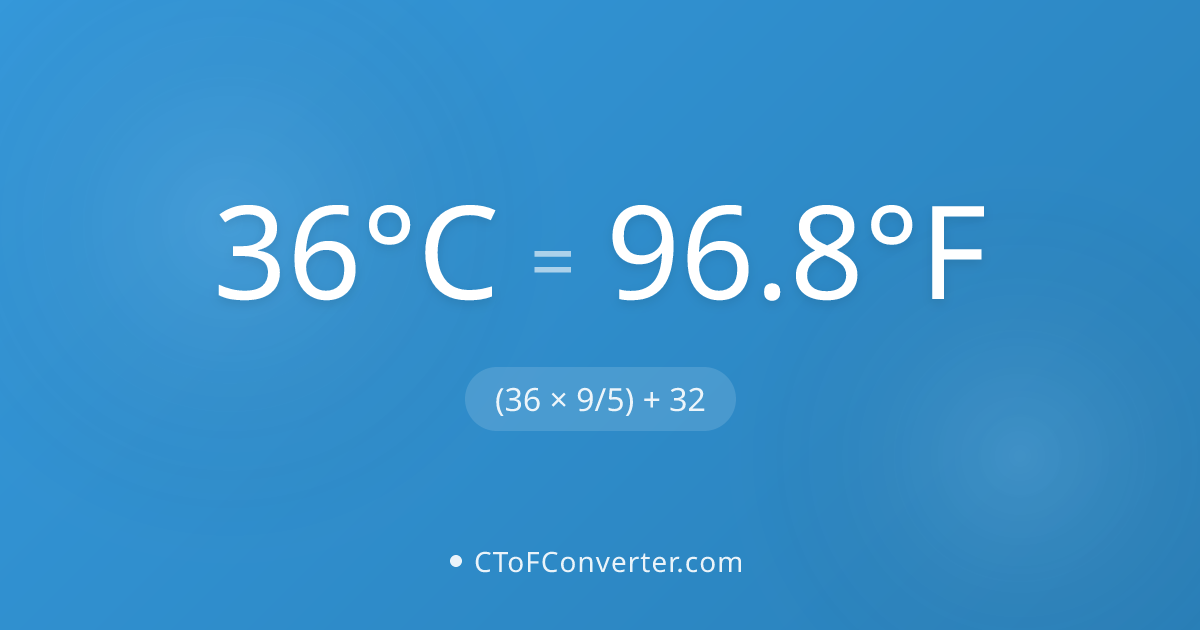
36 degrees Celsius equals 96.8 degrees Fahrenheit. This temperature conversion is commonly used in body temperature measurements. Consult our comprehensive Body Temperature Chart & Fever Guide for accurate diagnostics.
36°C Temperature Assessment: Normal Range
Adults
Normal
36°C = 96.8°F
Healthy range
Babies
Normal
36°C = 96.8°F
Typical for infants
Under Arm
Normal
36°C = 96.8°F
Axillary reading
36°C to Fahrenheit Conversion Formula
(36°C × 9/5) + 32 = 96.8°F
- Multiply 36 by 9/5: 36 × 1.8 = 64.8
- Add 32 to the result: 64.8 + 32 = 96.8
- Final result: 36°C = 96.8°F
Temperature Measurement Methods at 36°C
36°C (96.8°F) readings vary by measurement site. Understanding these differences helps ensure accurate assessment of normal body temperature.
Oral
36°C = 96.8°F
Lower normal oral reading
Under Arm
36°C = 96.8°F
36°C axillary = 36.5°C core
Ear
36°C = 96.8°F
Normal tympanic reading
Rectal
36°C = 96.8°F
Normal for infants
36°C Temperature Guide by Age Group
👶 Newborns (0-3 months) - Normal
36°C = 96.8°F
- 36°C (96.8°F) is within normal range for newborns
- Newborns have less temperature regulation ability
- Monitor for consistent patterns rather than single readings
- Contact pediatrician if consistently below 36°C or above 37.5°C
👶 Infants (3-6 months) - Normal
36°C = 96.8°F
- 36°C is a healthy temperature for this age
- Normal infant range: 36.0-37.5°C
- Monitor alongside feeding and activity levels
- Contact doctor if below 35.5°C or above 38°C
🧒 Children (6+ months) - Normal
36°C = 96.8°F
- 36°C is a normal morning temperature for children
- Temperature varies throughout the day (0.5°C difference)
- Lower end of normal but completely healthy
- Monitor if consistently below 35.8°C
👨🦳 Adults - Normal
36°C = 96.8°F
- 36°C is within normal adult range (36.0-37.2°C)
- Common morning temperature
- Individual baseline varies by 0.3-0.5°C
- Not a cause for concern
Body Temperature Scale
Understanding temperature ranges from low to high:
| Celsius (°C) | Fahrenheit (°F) | Assessment |
|---|---|---|
| 35.0°C | 95.0°F | Low - May indicate hypothermia |
| 35.5°C | 95.9°F | Low normal - Monitor if persistent |
| 36.0°C | 96.8°F | Normal - Lower end of healthy range |
| 36.5°C | 97.7°F | Normal - Common morning temperature |
| 37.0°C | 98.6°F | Normal - Average body temperature |
| 37.5°C | 99.5°F | High normal / Low-grade |
| 38.0°C | 100.4°F | Fever threshold |
Frequently Asked Questions
Yes, 36°C (96.8°F) is within the normal body temperature range. Normal adult temperature ranges from 36.0-37.2°C (96.8-99.0°F). Individual baseline temperatures vary by 0.3-0.5°C. 36°C is commonly seen in the morning or in people with naturally lower baseline temperatures.
36°C (96.8°F) is NOT too low for most adults. It's within the normal range, though on the lower end. Hypothermia concerns typically arise below 35.0°C (95°F). However, if your temperature is consistently below 35.5°C or you feel unwell, consult a healthcare provider.
36°C (96.8°F) is a normal temperature for babies. Infants often have temperatures between 36.0-37.5°C. Newborns have less temperature regulation, so monitor patterns rather than single readings. Contact a pediatrician if consistently below 35.8°C or above 37.5°C, or if baby shows signs of illness.
Morning temperatures are typically 0.3-0.5°C lower than afternoon/evening due to circadian rhythms. 36°C in the morning is completely normal. Body temperature naturally fluctuates throughout the day, being lowest around 6 AM and highest around 4-6 PM.
36°C (96.8°F) alone is not a cause for concern. Worry signs include: Temperature consistently below 35.5°C; Sudden drop from your normal baseline; Accompanied by symptoms like shivering, confusion, or fatigue; In babies: poor feeding, lethargy, or cold extremities. Otherwise, 36°C is a healthy temperature.
To convert 36°C to Fahrenheit: Multiply 36 by 9/5 (or 1.8) = 64.8; Add 32 to the result: 64.8 + 32 = 96.8; Final answer: 36°C = 96.8°F. This is a normal body temperature within healthy range.
ℹ️ Editorial Note
Medical temperature data is reviewed against clinical guidelines. Fever thresholds and body temperature interpretations align with standards from major health organizations. Content is compiled based on publicly available clinical guidelines.
Sources: World Health Organization (WHO), CDC, Medical Literature.