焼き菓子とケーキ
- 多くのケーキ、マフィン、カップケーキ、天板菓子の標準温度です。
- クッキーやビスケットで、縁をこんがりさせつつ中まで火を通したいときに向いています。
- 家庭向けベーキングレシピでよく使われる基本温度です。
180 度の摂氏(180°C)を華氏(°F)に変換できる無料オンラインツール。オーブン、エアフライヤーなど向けの式と手順を掲載しています。
180 degrees Celsius equals 356 degrees Fahrenheit, calculated as (180 × 9/5) + 32 = 356°F. This is the most common conventional oven temperature for baking cakes, cookies, and roasting vegetables. For fan ovens or air fryers, reduce to 160°C (320°F). In Gas Mark terms, 180°C corresponds to Gas Mark 4.
摂氏から華氏に変換するには、次の公式を使用します:
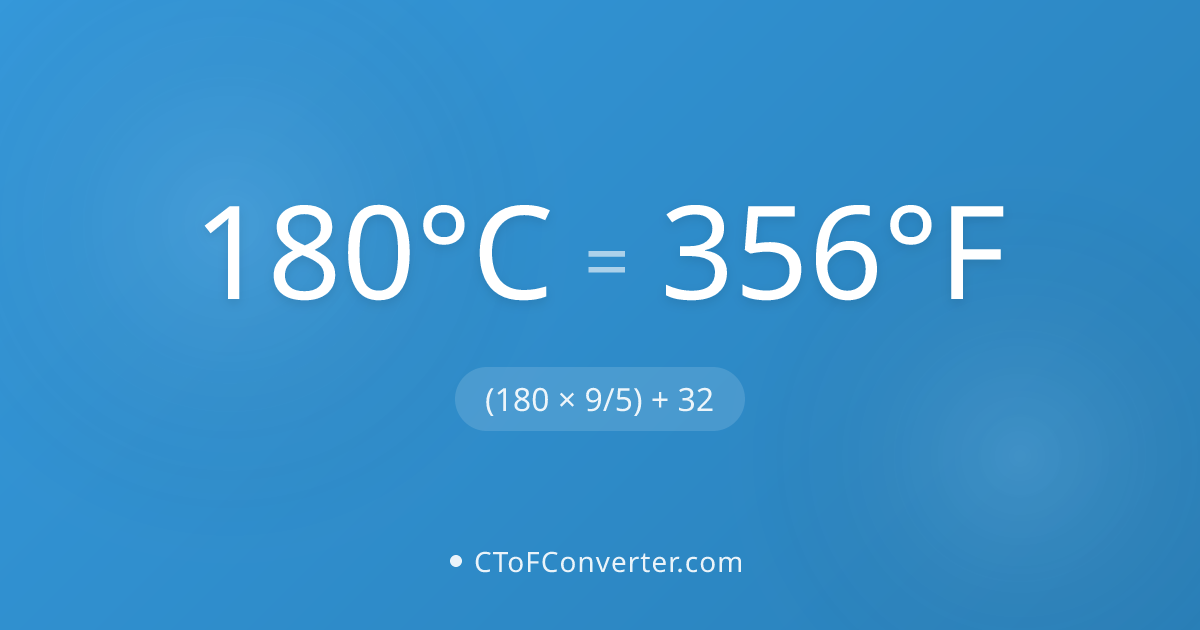
180°C は 356°F で、家庭のオーブン料理で最もよく使われる温度帯のひとつです。ケーキ、ロースト野菜、クッキー、日常的なベーキング料理に広く使われます。
しっかり焼き色をつけながら効率よく火を通せる一方で、外側だけ先に焦げるほど強すぎないのが特徴です。そのため、多くのレシピで 180°C が標準設定として採用されています。
通常オーブン、コンベクション、ファンオーブン、エアフライヤーを切り替える場合は、ファンオーブン換算表で比較してください。多くの場合、通常オーブンの 180°C はファンオーブンやエアフライヤーの 160°C に近くなります。
| 機器 | 対応温度 | 向いている用途 |
|---|---|---|
| 通常オーブン | 180°C / 356°F | 多くのケーキ、クッキー、家庭料理で使われる標準温度。 |
| ファンオーブン(コンベクション) | 160°C / 320°F | 熱風循環で火が通りやすいため、通常は低めに設定します。 |
| エアフライヤー | 160°C / 320°F | カリッと仕上げたい料理や少量調理の出発点として便利です。 |
| Gas Mark | Gas Mark 4 | ガス表示だけの古いレシピに役立ちます。 |
These are typical baking times at 180°C in a conventional oven. Always check doneness with a toothpick or thermometer rather than relying on time alone.
| Food | Time at 180°C | Doneness Cue |
|---|---|---|
| Sponge cake (20cm round) | 25–30 min | Skewer comes out clean, top springs back |
| Brownies (20cm square) | 22–28 min | Slight wobble in center, edges pulling away |
| Muffins (standard size) | 18–22 min | Golden top, skewer comes out clean |
| Cookies (drop cookies) | 10–15 min | Golden edges, centers still soft |
| Banana bread (900g loaf) | 50–60 min | Skewer comes out clean, cracked top |
| Roast chicken (1.5 kg) | 80–90 min | Internal temp 74°C / 165°F (USDA) |
| Roast vegetables | 30–40 min | Caramelized edges, fork-tender |
| Lasagna / casseroles | 30–40 min | Bubbling edges, golden top |
Oven temperature is not the same as food internal temperature. The USDA recommends these minimum internal temperatures to ensure food is safe to eat, measured with a food thermometer inserted into the thickest part.
| Food Type | Safe Internal Temp (°F) | Safe Internal Temp (°C) |
|---|---|---|
| Poultry (whole, ground, stuffing) | 165°F | 74°C |
| Ground meats (beef, pork, lamb) | 160°F | 71°C |
| Whole cuts (steaks, roasts, chops) | 145°F + 3 min rest | 63°C + 3 min rest |
| Fish and shellfish | 145°F | 63°C |
| Egg dishes | 160°F | 71°C |
| Casseroles and leftovers | 165°F | 74°C |
180°C is versatile, but some foods require a different temperature for proper results. Using the wrong temperature leads to cracked surfaces, burnt edges, or undercooked centers.
If your bakes at 180°C are not turning out right, the problem is often oven accuracy, rack position, or pan choice. Here are the most common issues and how to fix them.
| Problem | Likely Cause | Fix |
|---|---|---|
| Burnt outside, raw inside | Oven runs hot, or food too close to heat source | Lower to 170°C, move rack to center, use an oven thermometer to verify. |
| Cake sinks in the middle | Underbaked, or too much leavening agent | Extend baking time by 5–10 min, reduce baking powder by 1/4 tsp. |
| Pale, dense bake | Oven runs cool, or oven door opened too early | Raise to 190°C, avoid opening the door before 20 minutes. |
| Bottom burns before top browns | Dark pan absorbs more heat, or rack too low | Move rack up one position, double-pan, or use a lighter-colored pan. |
| Cakes crack on top | Oven too hot, or batter overfilled | Reduce to 170°C, fill pans no more than 2/3 full. |
編集注記:本温度変換コンテンツは、物理的計算の正確性を期すため、気象専門家および科学教育者によって校閲されています。調理などの実用的応用コンテキストは、NISTの標準ガイドラインに従っています。
出典:NIST, Physical Science Center, USDA.