烘焙与蛋糕
- 适合蛋糕、纸杯蛋糕、玛芬和烤盘甜点。
- 适合想要边缘金黄、中心熟透的曲奇和饼干。
- 很多家常烘焙食谱都会把它作为标准温度。
免费的在线温度换算工具,可立即将 180 摄氏度(180°C)转换为华氏度(°F),并提供适用于烤箱、空气炸锅等场景的公式与详细步骤。
180 degrees Celsius equals 356 degrees Fahrenheit, calculated as (180 × 9/5) + 32 = 356°F. This is the most common conventional oven temperature for baking cakes, cookies, and roasting vegetables. For fan ovens or air fryers, reduce to 160°C (320°F). In Gas Mark terms, 180°C corresponds to Gas Mark 4.
要从摄氏度(Celsius)转换为华氏度(Fahrenheit),请使用以下公式:
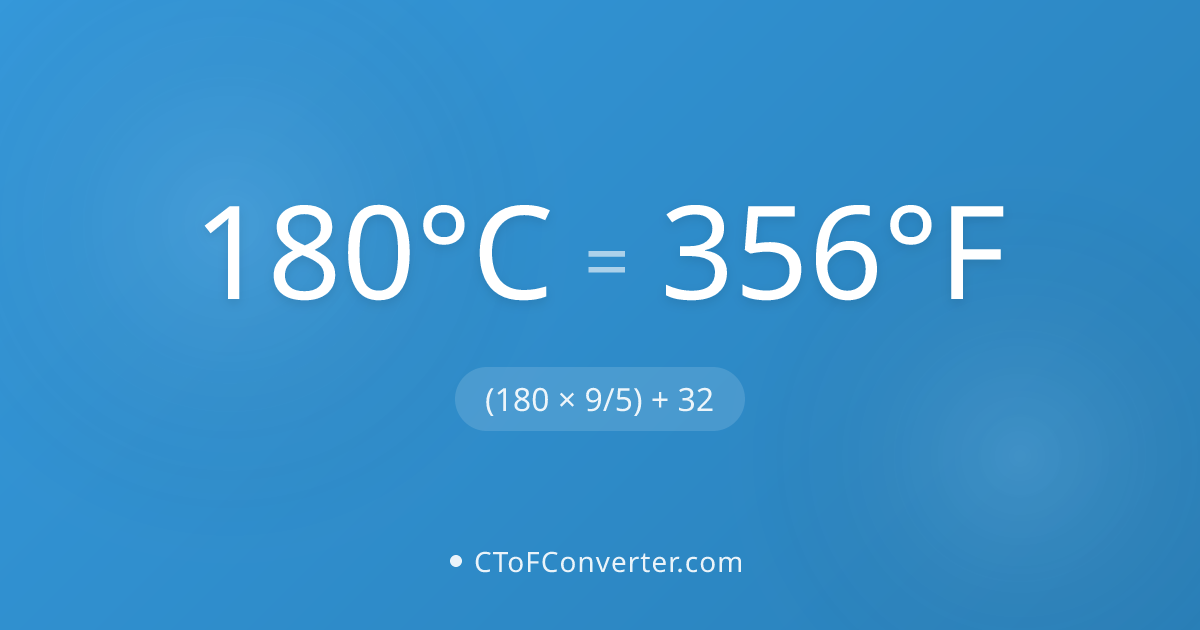
180°C 等于 356°F,是家庭料理里最常见的烤箱温度之一。它处在非常实用的中间区间,常用于蛋糕、烤蔬菜、曲奇,以及许多日常烤箱菜谱。
这个温度的优势在于,它足够高,可以让食物顺利上色并熟透,同时又不会高到让外层先焦、内部还没熟。因此很多烘焙和烤制食谱都会把 180°C 作为默认温度。
如果你需要在普通烤箱、热风烤箱、风扇烤箱或空气炸锅之间切换,请参考 风扇烤箱换算表。多数情况下,普通烤箱的 180°C 更接近热风烤箱或空气炸锅的 160°C。
| 设备类型 | 对应温度 | 适用场景 |
|---|---|---|
| 普通烤箱 | 180°C / 356°F | 很多蛋糕、曲奇和家常烤箱料理的标准温度。 |
| 热风烤箱(对流) | 160°C / 320°F | 热风循环更快更均匀,所以通常需要降低温度。 |
| 空气炸锅 | 160°C / 320°F | 适合作为炸物、烤物和小份量食物的起始参考温度。 |
| Gas Mark | Gas Mark 4 | 适合老食谱只给燃气档位、不写摄氏或华氏温度的情况。 |
These are typical baking times at 180°C in a conventional oven. Always check doneness with a toothpick or thermometer rather than relying on time alone.
| Food | Time at 180°C | Doneness Cue |
|---|---|---|
| Sponge cake (20cm round) | 25–30 min | Skewer comes out clean, top springs back |
| Brownies (20cm square) | 22–28 min | Slight wobble in center, edges pulling away |
| Muffins (standard size) | 18–22 min | Golden top, skewer comes out clean |
| Cookies (drop cookies) | 10–15 min | Golden edges, centers still soft |
| Banana bread (900g loaf) | 50–60 min | Skewer comes out clean, cracked top |
| Roast chicken (1.5 kg) | 80–90 min | Internal temp 74°C / 165°F (USDA) |
| Roast vegetables | 30–40 min | Caramelized edges, fork-tender |
| Lasagna / casseroles | 30–40 min | Bubbling edges, golden top |
Oven temperature is not the same as food internal temperature. The USDA recommends these minimum internal temperatures to ensure food is safe to eat, measured with a food thermometer inserted into the thickest part.
| Food Type | Safe Internal Temp (°F) | Safe Internal Temp (°C) |
|---|---|---|
| Poultry (whole, ground, stuffing) | 165°F | 74°C |
| Ground meats (beef, pork, lamb) | 160°F | 71°C |
| Whole cuts (steaks, roasts, chops) | 145°F + 3 min rest | 63°C + 3 min rest |
| Fish and shellfish | 145°F | 63°C |
| Egg dishes | 160°F | 71°C |
| Casseroles and leftovers | 165°F | 74°C |
180°C is versatile, but some foods require a different temperature for proper results. Using the wrong temperature leads to cracked surfaces, burnt edges, or undercooked centers.
If your bakes at 180°C are not turning out right, the problem is often oven accuracy, rack position, or pan choice. Here are the most common issues and how to fix them.
| Problem | Likely Cause | Fix |
|---|---|---|
| Burnt outside, raw inside | Oven runs hot, or food too close to heat source | Lower to 170°C, move rack to center, use an oven thermometer to verify. |
| Cake sinks in the middle | Underbaked, or too much leavening agent | Extend baking time by 5–10 min, reduce baking powder by 1/4 tsp. |
| Pale, dense bake | Oven runs cool, or oven door opened too early | Raise to 190°C, avoid opening the door before 20 minutes. |
| Bottom burns before top browns | Dark pan absorbs more heat, or rack too low | Move rack up one position, double-pan, or use a lighter-colored pan. |
| Cakes crack on top | Oven too hot, or batter overfilled | Reduce to 170°C, fill pans no more than 2/3 full. |
编辑说明:本温度转换内容由气象专家和科学教育者审核,确保物理计算的精确性。实用的应用场景(如烹饪温度)遵循 NIST 和专业烹饪标准指南。
来源:NIST, 物理科学中心, USDA。