الكيك والمخبوزات
- درجة قياسية للعديد من أنواع الكيك، والمافن، والكب كيك، والمخبوزات المنزلية.
- مناسبة للبسكويت عندما تريد حواف ذهبية ووسطًا ناضجًا جيدًا.
- تُذكر كثيرًا كدرجة أساسية في وصفات الخَبز المنزلي.
أداة مجانية عبر الإنترنت لتحويل 180 درجة مئوية (180°C) إلى فهرنهايت (°F)، مع الصيغة والخطوات المناسبة للفرن والقلاية الهوائية وغيرهما.
180 degrees Celsius equals 356 degrees Fahrenheit, calculated as (180 × 9/5) + 32 = 356°F. This is the most common conventional oven temperature for baking cakes, cookies, and roasting vegetables. For fan ovens or air fryers, reduce to 160°C (320°F). In Gas Mark terms, 180°C corresponds to Gas Mark 4.
للتحويل من مئوية إلى فهرنهايت، استخدم الصيغة التالية:
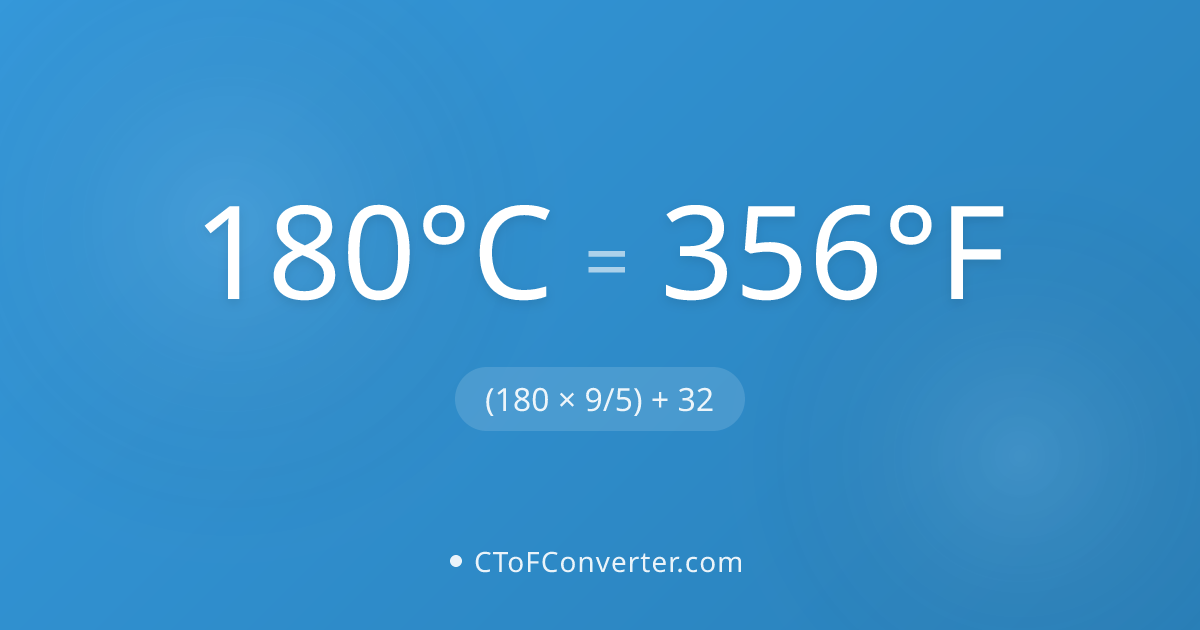
180°C تساوي 356°F، وهي من أكثر درجات الفرن استخدامًا في الطبخ المنزلي. تقع في النطاق المتوسط العملي لخبز الكيك، وشوي الخضار، وتحضير البسكويت، والعديد من وصفات الفرن اليومية.
تعمل هذه الدرجة جيدًا لأنها كافية لإعطاء لون وتحميص مناسبين مع طهي الطعام بكفاءة، لكنها ليست مرتفعة لدرجة تحرق السطح قبل أن ينضج الداخل. لذلك تعتمد كثير من الوصفات 180°C كدرجة أساسية للخبز أو الشوي.
إذا كنت تنتقل بين الفرن التقليدي، أو الحمل الحراري، أو فرن المروحة، أو القلاية الهوائية، فقارن الإعدادات عبر جدول تحويل فرن المروحة. ففي كثير من الحالات، تعادل 180°C في الفرن التقليدي نحو 160°C في فرن المروحة أو القلاية الهوائية.
| الجهاز | الدرجة المكافئة | أفضل استخدام |
|---|---|---|
| فرن تقليدي | 180°C / 356°F | درجة قياسية لكثير من الكيك والبسكويت وأطباق العائلة. |
| فرن بمروحة | 160°C / 320°F | يحتاج درجة أقل لأن الهواء المتحرك يطهو أسرع وبشكل أكثر تجانسًا. |
| قلاية هوائية | 160°C / 320°F | نقطة بداية جيدة للأطعمة المقرمشة والكميات الصغيرة. |
| Gas Mark | Gas Mark 4 | مفيد في الوصفات القديمة التي تعتمد إعدادات الغاز بدل الدرجات. |
These are typical baking times at 180°C in a conventional oven. Always check doneness with a toothpick or thermometer rather than relying on time alone.
| Food | Time at 180°C | Doneness Cue |
|---|---|---|
| Sponge cake (20cm round) | 25–30 min | Skewer comes out clean, top springs back |
| Brownies (20cm square) | 22–28 min | Slight wobble in center, edges pulling away |
| Muffins (standard size) | 18–22 min | Golden top, skewer comes out clean |
| Cookies (drop cookies) | 10–15 min | Golden edges, centers still soft |
| Banana bread (900g loaf) | 50–60 min | Skewer comes out clean, cracked top |
| Roast chicken (1.5 kg) | 80–90 min | Internal temp 74°C / 165°F (USDA) |
| Roast vegetables | 30–40 min | Caramelized edges, fork-tender |
| Lasagna / casseroles | 30–40 min | Bubbling edges, golden top |
Oven temperature is not the same as food internal temperature. The USDA recommends these minimum internal temperatures to ensure food is safe to eat, measured with a food thermometer inserted into the thickest part.
| Food Type | Safe Internal Temp (°F) | Safe Internal Temp (°C) |
|---|---|---|
| Poultry (whole, ground, stuffing) | 165°F | 74°C |
| Ground meats (beef, pork, lamb) | 160°F | 71°C |
| Whole cuts (steaks, roasts, chops) | 145°F + 3 min rest | 63°C + 3 min rest |
| Fish and shellfish | 145°F | 63°C |
| Egg dishes | 160°F | 71°C |
| Casseroles and leftovers | 165°F | 74°C |
180°C is versatile, but some foods require a different temperature for proper results. Using the wrong temperature leads to cracked surfaces, burnt edges, or undercooked centers.
If your bakes at 180°C are not turning out right, the problem is often oven accuracy, rack position, or pan choice. Here are the most common issues and how to fix them.
| Problem | Likely Cause | Fix |
|---|---|---|
| Burnt outside, raw inside | Oven runs hot, or food too close to heat source | Lower to 170°C, move rack to center, use an oven thermometer to verify. |
| Cake sinks in the middle | Underbaked, or too much leavening agent | Extend baking time by 5–10 min, reduce baking powder by 1/4 tsp. |
| Pale, dense bake | Oven runs cool, or oven door opened too early | Raise to 190°C, avoid opening the door before 20 minutes. |
| Bottom burns before top browns | Dark pan absorbs more heat, or rack too low | Move rack up one position, double-pan, or use a lighter-colored pan. |
| Cakes crack on top | Oven too hot, or batter overfilled | Reduce to 170°C, fill pans no more than 2/3 full. |
ملاحظة تحريرية: تمت مراجعة المحتوى لضمان الدقة. تتبع التطبيقات العملية إرشادات NIST.
المصادر: NIST، مركز العلوم الفيزيائية، وزارة الزراعة الأمريكية (USDA).